
House Measurement Survey: How to Save Time on Site (Complete Guide)
Taking measurements is an essential step in any construction, renovation or interior design project. Yet on site, this task often remains long, repetitive and error-prone. Between back-and-forth trips, oversights and data transcription, construction professionals lose valuable time. Today, new methods allow you to take measurements faster, with more accuracy and less effort.
What you will learn
- How to take measurements quickly
- Limitations of the traditional method
- 3D scanning and LiDAR technology in practice
- Comparison of survey methods
How to take measurements quickly
Here is the most efficient method today for surveying a house or apartment:
Scan the room
Generate the plan
Check dimensions
Add openings
Export the plan
This approach significantly reduces the time spent on surveys while improving accuracy.
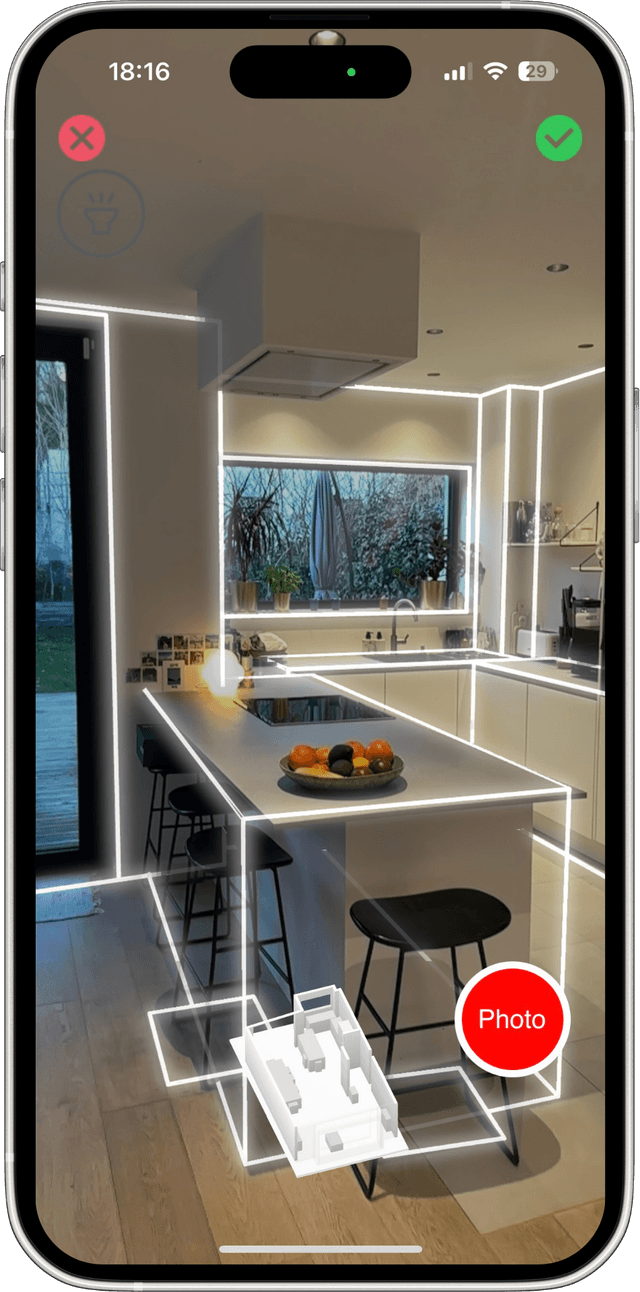
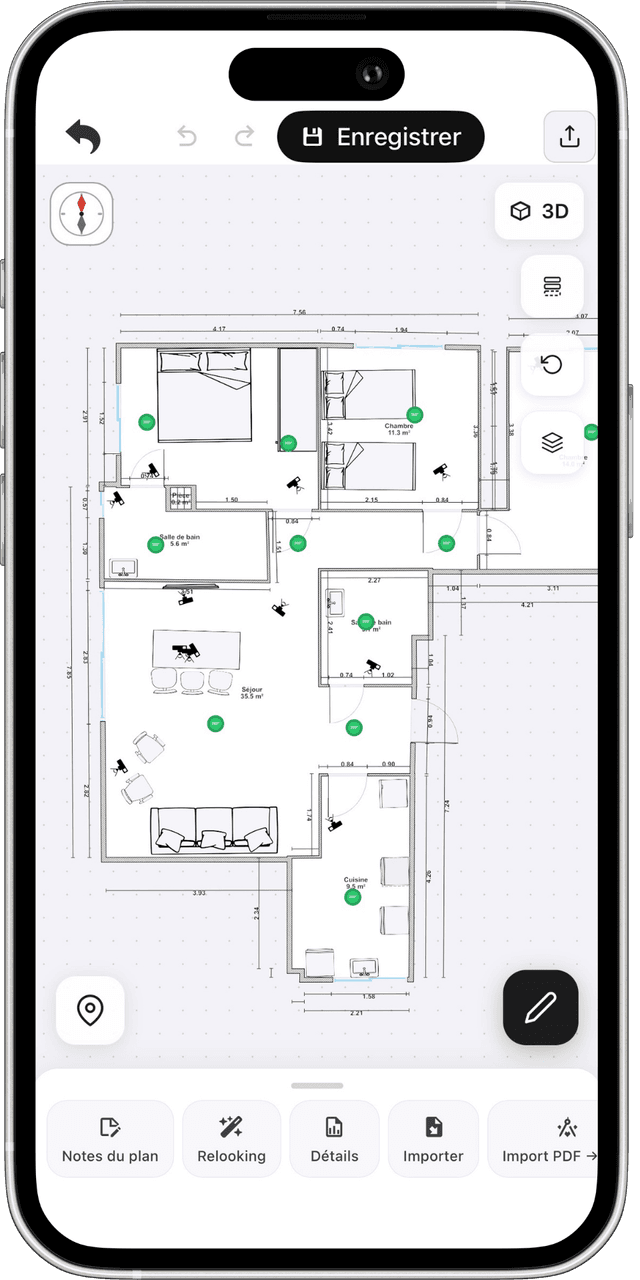
LiDAR scan on site and automatic floor plan generation
Traditional method: a still widely used approach
On most construction sites, measurement surveys still rely on classic tools:
- Tape measure
- Laser rangefinder
- Manual note-taking
Limitations of this method
Despite its widespread use, this approach has several constraints:
- Multiple trips to verify measurements
- Risk of human error
- Frequent oversights of certain dimensions
- Difficulty transcribing data into a usable plan
These limitations lead to significant time loss, especially during the design phase.
Common problems encountered on site
In practice, professionals face several difficulties:
Incomplete surveys
Missing dimensions that require a return visit.
Measurement inconsistencies
Discrepancies between different measurements of the same space.
Return trips to site
The need to go back on-site to complete data.
Office time wasted
Hours spent correcting and transcribing plans.
These problems directly impact the productivity and profitability of projects.
The new approach: 3D scanning and LiDAR technology
Technological advances now make it possible to radically simplify measurement surveys. With LiDAR, you can now scan a space in seconds and automatically extract dimensions.
In practice, this allows you to:
- Capture a space quickly
- Get a usable plan immediately
- Minimize human errors
How to measure a house with an iPhone Pro
Recent iPhones Pro include a LiDAR sensor capable of accurately measuring volumes. The process is simple:
Launch the app
Open a scanning app
Move around
Walk slowly through the room
Capture
Surfaces and volumes are recorded
Get the plan
The plan is generated automatically
This method significantly reduces the steps needed for a complete survey.
Integration with Make Plan
Solutions like Make Plan fully leverage this technology. With Make Plan, you can:
- Scan a property directly from an iPhone Pro
- Automatically generate an accurate floor plan
- Immediately use the data for a project
This allows you to go from survey to plan with no intermediate steps.
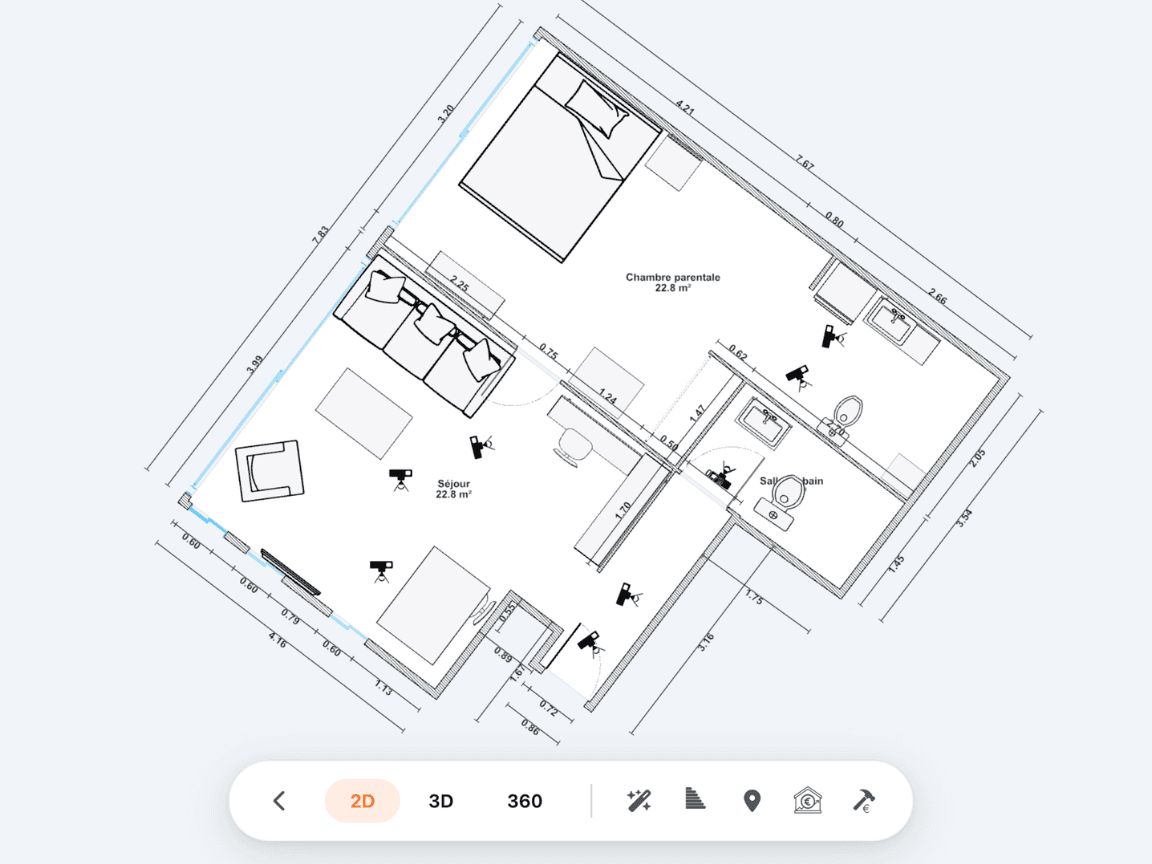
Floor plan automatically generated after a survey with Make Plan
Practical use cases
Renovation contractor
- Quick survey before preparing a quote
- Reduced measurement errors
Real estate agent
- Create plans to showcase a property
- Improved listings
Architect
- Reliable basis for design
- Time saved during surveys
Survey method comparison
| Method | Speed | Accuracy | Ease of use |
|---|---|---|---|
| Manual | Slow | Medium | Low |
| Traditional software | Medium | Good | Medium |
| LiDAR scan | Very fast | High | High |
Benefits for professionals
Adopting a modern solution provides:
- Significant time savings on each survey
- Reduced errors
- More reliable floor plans
- Improved overall productivity
+50%
time saved on surveys in some cases
Frequently asked questions
How to take accurate measurements?
What app to measure a house?
Is LiDAR accurate for house surveys?
Can you create a plan directly after a survey?
Optimize your surveys
starting now
Get 2 projects completely free.
Scan and generate plans in minutes! *
No commitment.
* LiDAR feature available only on iPhone Pro and iPad Pro